


In early May, two of our experienced Atlassian experts traded the familiar desks in Sofia for the buzzing atmosphere of Anaheim, California. Georgi Gachev and George Stoyanov represented Nemetschek Bulgaria at the Atlassian Team '26 conference, diving deep into the future of teamwork, AI, and the evolving Atlassian ecosystem.
From the intense discussions at Harley's House Unconference and Partner Accelerate to the high-energy keynotes of the main summit, we returned with more than just jet lag – we brought back a roadmap for the next era of digital collaboration.
Here's our recap of the key announcements and what they mean for the organizations we work with.
The Big Shift: From "AI Inside Atlassian" to "Atlassian as the Context Layer"
The headline story from Team '26 was not a new feature – it was an architectural repositioning.
Atlassian announced that the Teamwork Graph CLI entered open beta (with over 300 graph-aware commands), new Teamwork Graph tools were added to the Rovo MCP Server in open beta, and Teamwork Graph Connectors via Forge reached general availability. Taken together, these mean that the organizational context embedded in Jira, Confluence, and JSM – ownership, dependencies, workflow history, service relationships – is now directly consumable by external AI systems and developer tooling.
In practical terms: your team's Claude Desktop, your developers' Cursor and Claude Code, your IT team's Copilot – they can all now query your Atlassian data natively, with live permissions and relationships intact.
Our Take: This is the announcement we keep coming back to. For our clients with thousands of Confluence pages and complex Jira setups, the value of their Atlassian investment just expanded dramatically. The data they've been building for years is no longer locked inside a browser tab – it becomes portable intelligence that powers whichever AI tool their teams already prefer. As a partner, our role shifts from "configuring tools" to "helping organizations make their operational context trustworthy enough for AI to act on."
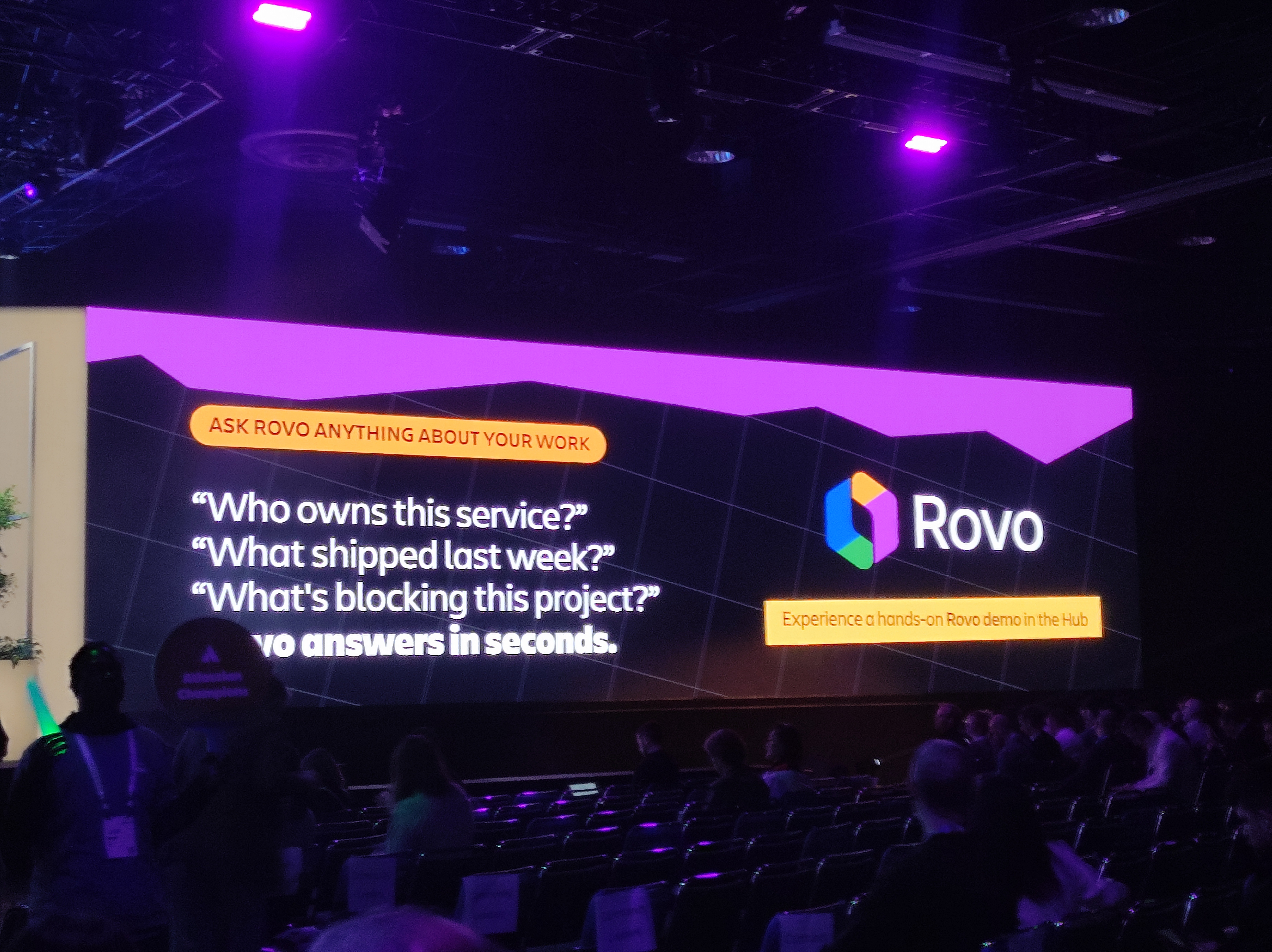
Rovo Studio and "Max" Mode: AI That Does the Work, Not Just Answers Questions
Alongside the platform story, Atlassian unveiled Rovo Studio (now GA) – a unified builder hub where anyone, not just engineers, can describe what they need in natural language and have Studio assemble the right agents, automations, and apps.
They also previewed Max reasoning mode for Rovo Chat (coming soon in early access): a new capability where Rovo can take a messy, real-world request, break it into a multi-step plan, execute it end-to-end across Atlassian and connected tools, and share the outputs with the team.
Other notable Rovo announcements:
- Agents in Jira – now generally available, allowing teams to assign work to AI agents, @mention them in comments, and embed them directly into Jira workflows and automations. Every interaction is auditable in Jira.
- Remix with Rovo in Confluence (beta) – transform text, tables, and lists into infographics, charts, diagrams, and visualizations in-page, without overwriting the source content. Confluence slides are coming soon in beta.
- Code Intelligence in Rovo (early access) – lets engineers and coding agents ask intent-level questions across complex, multi-repo environments (e.g. "which services still use an outdated UI pattern and who owns the migration?") by combining the source graph with context from Jira and Confluence.
Our Take: Rovo Studio lowers the barrier to AI adoption significantly. We've seen many organizations struggle because building automations required deep Jira administration knowledge. Now, a project manager can describe what they need and build it themselves. For partners like us, this means we can focus less on building individual automations and more on designing the AI strategy that makes the whole system work.
Strategy Collection: AI Meets the C-Suite
Team '26 introduced three spotlight capabilities under the Strategy Collection – Atlassian's play for the executive operating model:
- Strategic Intelligence in Focus (early access) – a personalized "For You" page that surfaces portfolio health, at-risk goals and projects, and how strategy connects to actual work. Rovo continuously analyzes Teamwork Graph context so leaders aren't reassembling the picture every Monday from stale reports.
- Strategic Planning in Focus – replaces the annual plan-as-document with a shared, living model. Leaders rank what matters, see the cut-line of what's actually achievable given real capacity, and get risk signals from Rovo the moment something starts to drift.
- Human + AI Capital Management (coming soon) – two paired capabilities: Workforce Skills infers what people can actually do from Teamwork Graph activity (code committed, pages authored, issues resolved, projects shipped) – no surveys, no stale job descriptions. And for the first time, AI adoption and spend become visible at the same level of detail, broken down by reporting line and strategic priority.
Our Take: That last point is the one every CFO will ask about. Organizations are spending heavily on AI tools, but few can answer the question: "Which strategic bets is our AI investment actually advancing?" Once Human + AI Capital Management ships, Atlassian will be one of the few platforms positioned to give a credible answer – because the spend data lives in the same model as the strategic priorities it's supposed to fund. For enterprise clients evaluating their Atlassian investment, this is a powerful forward-looking story to watch.
Real Conversations at Brain Dates
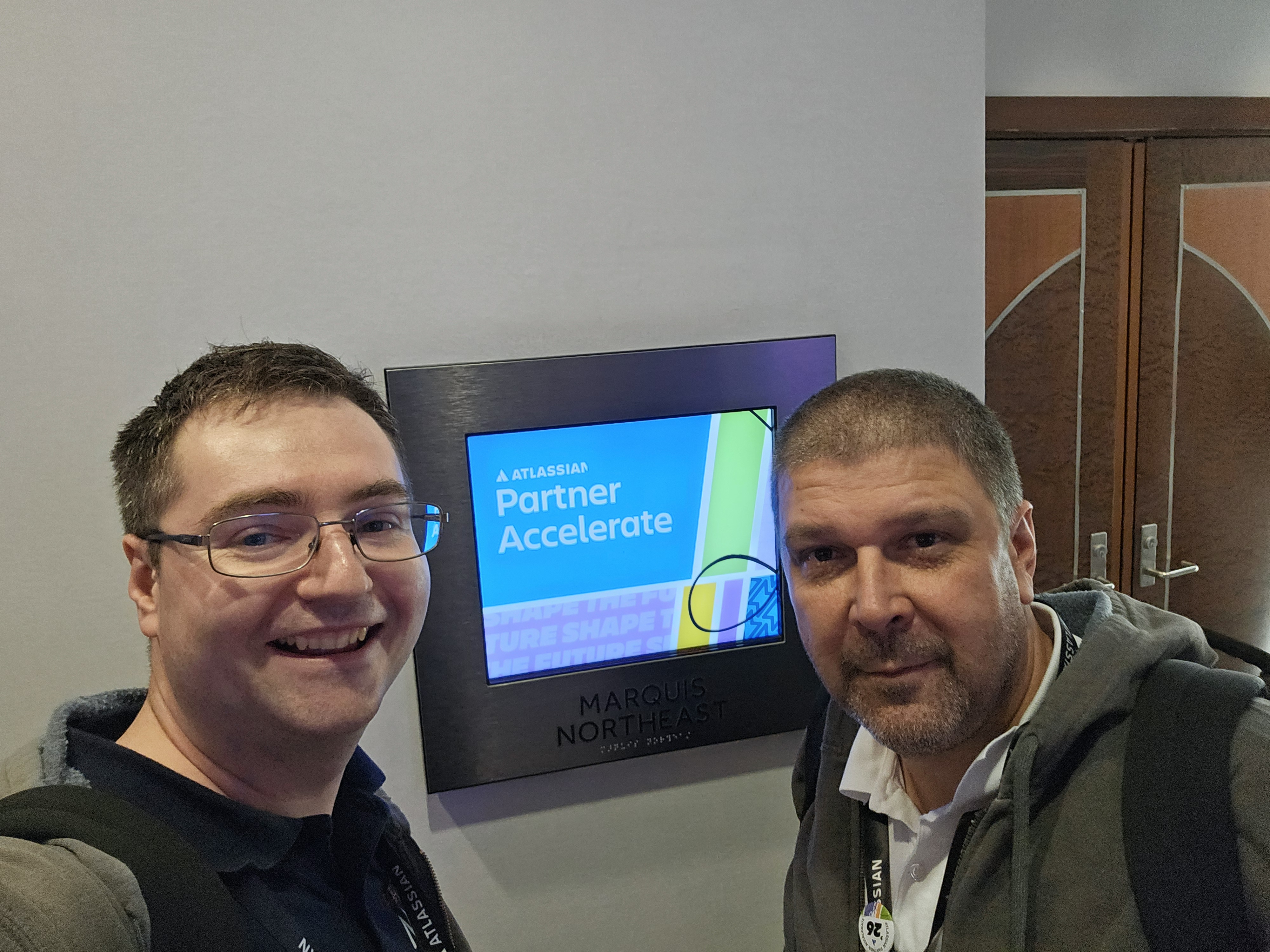
Our own George Stoyanov hosted two Brain Dates during Partner Accelerate, focusing on our clients and their major pain points:
- Missing languages in Atlassian Cloud: Exploring how to overcome market blockers in non-English speaking regions.
- Rovo Training for Customers: Defining what partners should offer to help clients adopt AI effectively.
All in all, it was a great experience – we managed to share what our main challenges are and to get insight into how our partners manage to get over the issues they encounter.
Another Note from the Team
As Georgi Gachev puts it: “Heading to California, we had a clear purpose: to find concrete answers to the questions our clients ask every day. Among the answers we found, the most important wasn't any single feature – it was the clarity of Atlassian's bet that AI won't live inside their products alone. By opening the Teamwork Graph to external agents, they confirmed where the industry is heading – and that we're on the right track.”
What's Next?
If you'd like to explore how your organization can take advantage of Atlassian's new AI capabilities, we're here to help.
Ready to evolve your teamwork? Talk to our experts and let's discuss how the innovations from Team '26 can work for you.